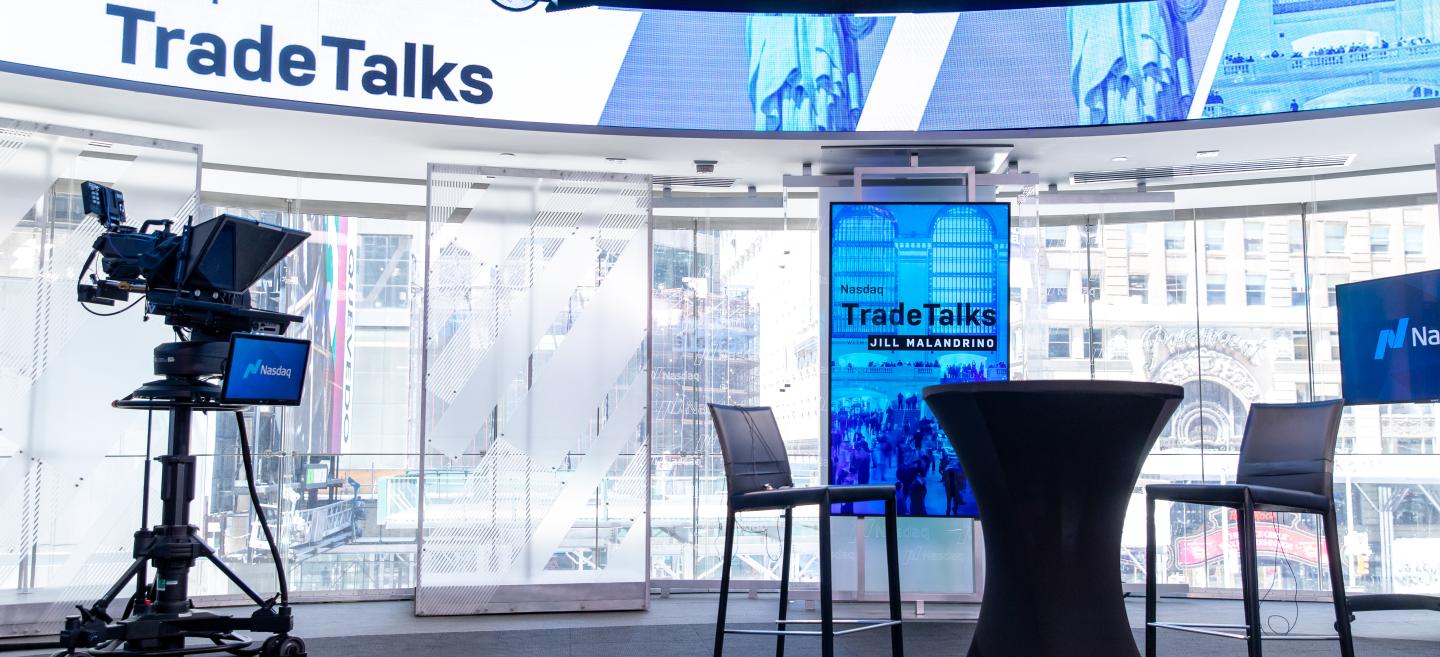
We speak with Matt Lewis, Head of ETF Implementation and Capital Markets at American Century, about ETF capital markets and the different layers of ETF liquidity. Lewis also talks about what investors should understand about newer and lower volume ETFs and the latest trends in the ETF space.

This Week's Guest Spotlight
Matt Lewis, Head of ETF Implementation and Capital Markets at American Century
What are ETF capital markets, what are some critical components, and who are the key players?
ETF issuers committed to the ETF space will have an ETF Capital Markets Team. The team has a deep understanding of ETFs from how the products operate to how clients utilize the products. I look at ETF Capital Markets as having three primary core functions, among other responsibilities like coordinating the launch of a new product with the ETF eco-system.
The three functions are to build and maintain relationships with ETF liquidity providers and other ETF ecosystem participants, monitor the ETF market quality, and help clients, advisors and the sales team navigate the ETF ecosystem to achieve the most efficient execution. The activity of an ETF Capital Markets team is to set and maintain the foundation for investors and advisors to have a great experience utilizing our ETFs.
What is a Market Maker and what is an Authorized Participant? And what is the difference between the two?
A market maker is a broker dealer ready to provide a quote for an ETF order. They can do this by posting the quote on the exchange or directly conversing with an investor. An authorized participant is a broker dealer with direct access to the ETF to create and redeem ETF shares. Creation and redemption happen at an institutional level where large investors and ETF market makers will use an authorized participant to create and redeem shares of the ETF.
Some broker dealers decide to either be market makers or authorized participants. A broker dealer can also be a market maker and an authorized participant. The critical distinction is that when the broker dealer offers an investor a quote, the dealer acts as a market maker. When the broker dealer creates shares of an ETF, they act as an authorized participant.

What are the different layers of ETF liquidity?
ETFs have three layers of liquidity. The first is the on-screen liquidity, which includes bid-ask spread and size available to trade. It is trading activity that has already transpired and is visible in the secondary market, where ETFs are priced and sold. The following two layers of ETF liquidity come into play after the first layer is considered. The second layer is non-displayed liquidity. This layer is where a market maker can provide liquidity for larger trades.
Market makers can provide efficient pricing for larger trades than shown with the on-screen liquidity because of the third layer of ETF liquidity which is in the underlying basket of securities. This is where the creation or redemption of ETF shares take place. Market makers can also access this liquidity using underlying securities to create more shares of the ETF when there is more demand than supply.
The market maker or authorized participant will buy a basket of underlying securities and deliver them to the ETF custodian and in return receive ETF shares. The liquidity of the underlying securities that the ETF holds is the basis of liquidity for that ETF.
Most investors are not involved with this activity. Once a market maker executes a trade with an investor, he/she will manage the risk of the trade and decide if a creation or redemption is needed based on the available inventory of ETF shares.
What should investors understand about newer and lower volume ETFs?
The most crucial thing investors should understand about ETF volume and liquidity is that volume does not equal liquidity. If an ETF shows a lower average daily volume, the market maker can access liquidity through the three layers of ETF liquidity. I guide advisors to use the institutional block desk which their custodial platforms typically have as a resource.
Institutional block desks are professional traders with direct access to multiple ETF liquidity providers. These desks work with the ETF liquidity providers to put the order out for a competition to obtain the most efficient price execution.
Investors that do not have access to an institutional type of trading desk should place a trade with a limit order. Although it takes an extra step to specify a limit price for the order, it protects the price that the investor wants to trade. It also allows the market to view the order and have the market maker execute that order very quickly.
I typically guide an advisor to put the limit order price one or two pennies above the prevailing buy offer and below the sell bid. The market maker can assess the order and execute at a price that is the most efficient without exceeding the price that was stated.
I use a limit order for all my ETF trades, even for higher volume ETFs because I want to protect the price that I would get for the ETF trade.
What are some trends that are impacting the ETF space today?
We continue to see ETFs as the preferred investment vehicle for portfolio allocation or obtaining a specific exposure to an asset class. With more investors using ETFs to implement their investment views, it brings more market participants and trading efficiencies to the products. The current trend is the growth of active ETFs and fixed income ETFs.
ETFs have been around for 30 years, and now we see more investors using active ETFs to help reach an investment goal. We are also seeing more creative fixed income ETFs that can achieve a higher degree of income and have a professional manager manage the duration and sector allocation.
One of our newer ETFs, American Century Short Duration Strategic Income ETF SDSI is managed to achieve a high degree of current income plus total return potential through the capture of market dislocations. SDSI employs a rotation across a variety of income generating asset classes including corporates, securitized and emerging market, while also managing duration based on current market dynamics.
How do we tie this all up?
With more ETF products coming to market and being the first stop in investment vehicle choices, advisors and investors are spending more time assessing ETFs for their investment objectives. The volume of an ETF should not influence an advisor’s decision to use that ETF. As mentioned, volume of an ETF does not equal its liquidity.
When there is a determination that an ETF provides the needed investment strategy, ETF shares can be sourced with a few additional simple steps that can help achieve efficient execution.
This interview originally appeared in our TradeTalks newsletter. Sign up here to access exclusive market analysis by a new industry expert each week. We also spotlight must-see TradeTalks videos from the past week.


TradeTalks Newsletter
Sign up to receive your weekly dose of trading news, trends and education. Delivered Wednesdays.
More Related Articles

This data feed is not available at this time.
Data is currently not available